






info@pouchcustom.com +86 13712053432
In the world of food storage and industrial packaging, few materials have sparked as much interest as the Mylar bag. Often associated with long-term survival kits or high-end coffee packaging, these bags are frequently touted as the "gold standard" for preservation. But beyond the buzzword, what exactly is inside the material structure of a Mylar bag, and why is it so effective at stopping time for perishable goods?
The Core Material: BoPET and the "Mylar" Trademark
To understand the bag, one must first understand the film. The term "Mylar" is a registered trademark owned by DuPont Films, but it has become a genericized trademark used to describe a specific type of polyester film known scientifically as BoPET (Biaxially-Oriented Polyethylene Terephthalate).
Developed in the 1950s by competing teams at DuPont (USA), Imperial Chemical Industries (UK), and Hoechst (Germany), BoPET is created by stretching polyethylene terephthalate (PET) in two directions. This process aligns the polymer chains, resulting in a film with high tensile strength, chemical stability, and dimensional stability. While this base film provides the bag with its toughness and heat resistance, a pure PET film is not enough to create the "super bag" used for long-term storage.
The "Sandwich" Structure: Engineering a Barrier
A true high-barrier Mylar bag is rarely a single layer of plastic. It is a sophisticated composite structure—essentially a laminate "sandwich" designed to leverage the strengths of different materials.
The Outer Layer is typically the BoPET film described above. This layer provides the physical strength, puncture resistance, and a pristine surface for high-quality printing and branding. It protects the bag from abrasion and handles the heat of the sealing process without shrinking.
The Middle Layer is where the magic happens. To achieve the "high barrier" properties mentioned in technical specifications, a layer of metal is introduced. This is usually pure aluminum foil or a vacuum-metallized layer (VMPET). This metallic barrier is opaque, reflecting light and blocking 100% of UV rays. More importantly, it creates an impermeable wall against gases, aromas, and moisture.
The Inner Layer is generally Polyethylene (PE). This food-safe layer is crucial because PET and Aluminum cannot be heat-sealed effectively on their own. The PE layer melts at lower temperatures, creating the airtight seal that locks the contents inside.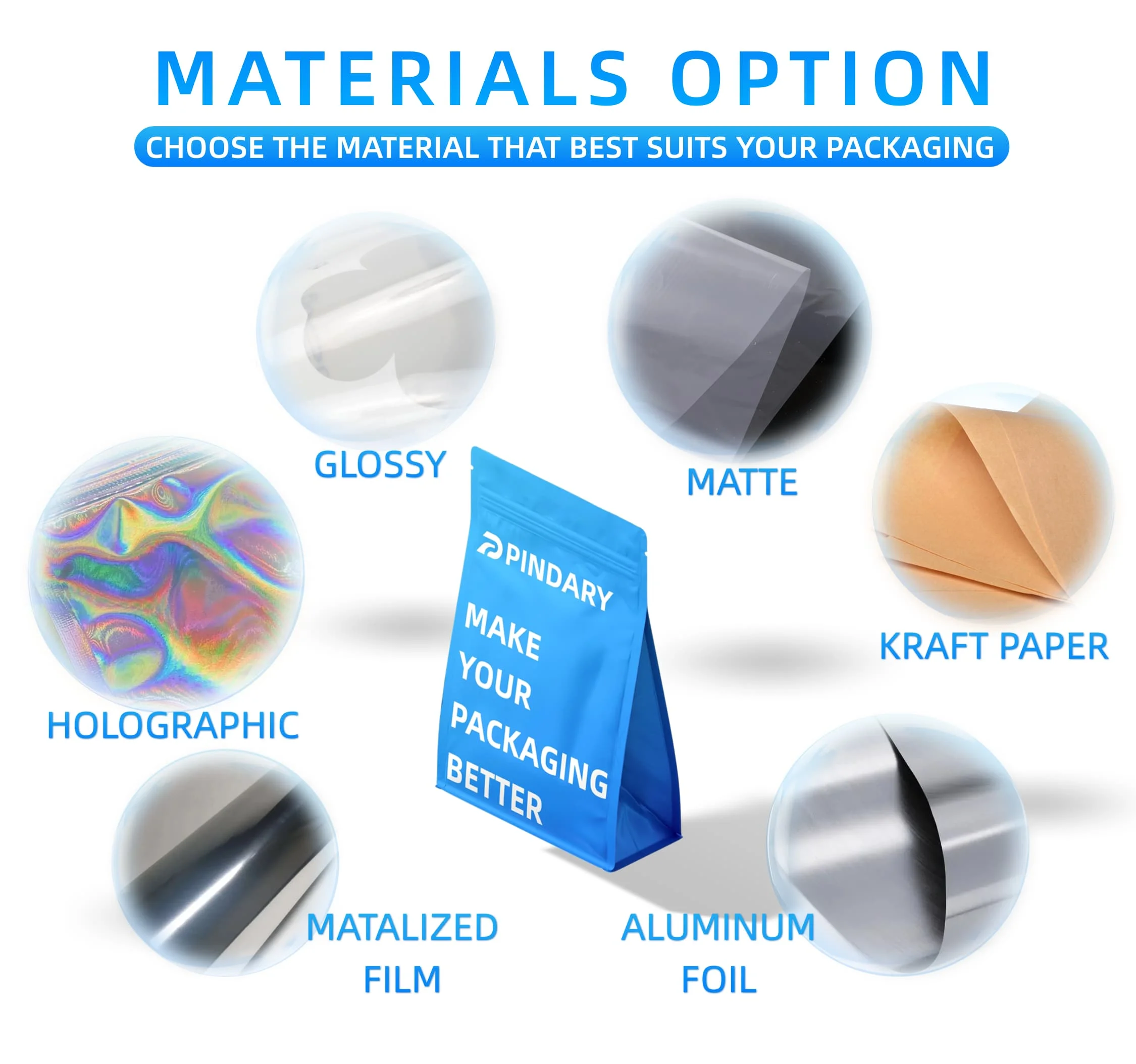
The Enemy of Freshness: Light, Oxygen, and Moisture
The primary function of this multi-layer construction is to combat the three destroyers of food quality: light, oxygen, and humidity.
Mylar bags are unique in their ability to offer a light barrier. Light can degrade vitamins and cause oxidation even without heat. By blocking all light, the bag preserves the color and nutritional value of the contents.
Regarding gas and aroma barriers, the aluminum layer prevents outside air and humidity from entering, while simultaneously keeping the volatile aromatic compounds of the food (like coffee or spices) from escaping.
However, it is important to note that while the bag blocks external elements, it does not remove the oxygen already trapped inside. As noted in industry data, oxygen remains in the headspace (the air above the food) and within the food itself. Therefore, for maximum shelf life, Mylar bags are almost always used in conjunction with oxygen absorbers.
Practical Application: Shelf Life and Thickness
When used correctly, Mylar bags can significantly extend the life of dry goods.
Shelf Life Expectations
Grains and Flours: Items like brown rice, whole-wheat flour, and pearl barley can last approximately 3 years or more.
Dehydrated Goods: Fruits and vegetables retain quality for several years, though this depends on the residual moisture content.
High-Oil Foods: Nuts and seeds have a shorter window, typically around 2 years, due to the natural oils that can eventually turn rancid despite the barrier.
Understanding Thickness (Mil)
The durability of a Mylar bag is measured in "mil" (thousandths of an inch).
3.5 mil: A lighter duty bag, often used for retail packaging where flexibility is preferred.
5 mil: The industry standard for long-term food storage, offering a balance of stiffness and capacity.
7.5 mil: A heavy-duty option. These bags are very stiff and offer maximum puncture resistance, though the thicker walls slightly reduce the internal volume.
Commercial Viability and Production
For businesses, the transition to Mylar packaging is not just about protection; it is about branding and logistics. Because the outer PET layer accepts high-quality printing, brands can create striking visual identities on the shelf.
Production timelines are also surprisingly agile. Specialized manufacturers can often ship rollstock (the raw material for packaging machines) in as little as 10 business days after artwork approval, with formed pouches following shortly after at around 15 business days.
From its origins in 1950s industrial research to its current role in pantries and supply chains, the Mylar bag remains a triumph of material science—turning simple polyester and aluminum into a fortress for freshness.

Contact: Ivy
Phone: +86 13712053432
E-mail: info@pouchcustom.com
Add: 1080, block y, Tian'an Digital City, Huangjin Road, Nancheng street, Dongguan City, Guangdong Province, China.
LiveChatclose
 Send Email
 WhatsApp